"And so hopefully, if our humble little show touches you in any way, you might walk out of this theater a slightly different person."
Eric Bogosian, Wake Up and Smell the Coffee

Thursday, October 14, 2010

New Things on my Blog... So exciting!

So, Benji got a makeover :)

You will notice the new flashy features on my BEAUTIFUL SIDEBAR:
-Quotes!
-GLEE VIDEOS
-Links to sites I like
-Maybe more? Who knows!

I have also uploaded my ME project, and will be posting a new long blog post about "My Theatre Life....So Far" soon! And look out for videos on practitioners with the upcoming unit on theatrical geniuses ;D
SO MUCH EXCITEMENT!

Peace, Love, and the Smell of Bacon <3

Tuesday, October 12, 2010

Contemporary Play Reaction


Contemporary Play Reaction
 
1.   This play is all about sexuality, which became a primary topic and subject matter for plays in the contemporary style. In addition to the topic of sexuality, this play was originally in German, but the version I read was translated into English. This exhibits the contemporary trend of spreading the works of playwrights across language barriers, and across the world.
2.   I most likely do not know the “-ism” I am seeing in this play, so I’ll just make one up. I’d probably start with petridism, coming from the word “petri dish” because this entire play has a feel of kids experimenting with each other like bacteria in a petri dish. Also, the parents and adults never speak in short scene, they must drag on in long, illustrious speeches like grand observers of the actual “experiments” or scenes with children talking to one another in quick exchanges. In addition to petridism, I would say sexualism, or perhaps fantacism concerning the ghost scene towards the end.
3.   I think that the theme Wedekind attempts to portray about children living sheltered lives, and the about how love truly is a “great experiment” with sometimes disastrous results is very relevant, and so I would say he is very much alive through this play and other works of his.
4.   Connecting to number three, Wedekind’s theme is timeless, and applies to today’s society as much as any other time. Love is and always will be awkward, particularly at the age of Moritz and Wendla and the others. In some parts of the world, children are still successfully sheltered from sex and sexuality for a great deal of their young adult lives.
5.   I think that a key part of Spring Awakening is the “closed” society where nothing is discussed in the open. Germany in this particular time period is quite fitting for the show, but I could possibly see this play being translated to another community known for being “closed” like, the Amish.
6.   Digitalism, because the new age of technology will play a vital role, in fact it will almost HAVE to play a vital role in theatre of the performance art to survive. J

Sunday, October 10, 2010

Theatrical Influences in Our Town

Bienvenidos, Benji!
Thornton Wilder was a revolutionary when he came out with Our Town. He did things in the theatre no one of his time was used to doing. However, Mr. Wilder did not do it alone. Throughout his life he observed other practitioners and practices, and then blended them all together with a touch of his own style to formulate this American Classic. 


THEATRICAL EXPRESSIONISM
A good description of this concept is "a departure from realism". And Thornton Wilder , while constructing a somewhat believable town, made sure his audiences were aware that Grovers Corners and its story was not real, it was merely a play that could be manipulated in any way the Stage Manager saw fit.. The character of the Stage Manager is a key player when it comes to demonstrating this, using lines such as "now we'll skip a few hours," as well as interrupting scenes, initiating flashbacks, and stepping in and out of other roles when necessary. Expressionism focuses on the spiritual aspects of humanity, not the external parts. I think that in Our Town, the heart of expressionism can be found in the opening speech of the Stage Manager in Act III, where she talks about "something" being eternal, and how it isn't "houses, names, earth, or even the stars".


EPIC THEATRE
This Brechtian (?) method is all about the combination of narration and scene, but to make the divide very clear. In Our Town, the Stage Manager makes it very clear when the scene is happening, and when it is her turn to tell the story. The stagehands make scene changes very obvious, and the Stage Manager herself turns the lights on and off, again making what is one thing and what is another very clear. This concept of Epic Theatre also connects to the previous practice of Theatrical Expressionism, using the obvious set changes, etc. to illustrate how this play is not reality, and how this story is indeed just a story. However, the audience leaves the building thinking about the play's message nonetheless.


GREEK DRAMA
The most evident part of Greek Drama that appears in Wilder's play is that of the Greek Chorus, normally a group of people who react in the way a "perfect audience" would, if the playwright had his way. The Stage Manager embodies this chorus in a consolidated form, preparing audiences for the act or scene ahead with philosophical thoughts and questions and summing it all up when the act or scene is complete. Another aspect of Greek Drama is music, which our particular production used. The appropriate music woven with pictures of the past-- life, love, death, etc.-- created a audio-visual soundtrack to accompany Thornton's theme.


NOH DRAMA
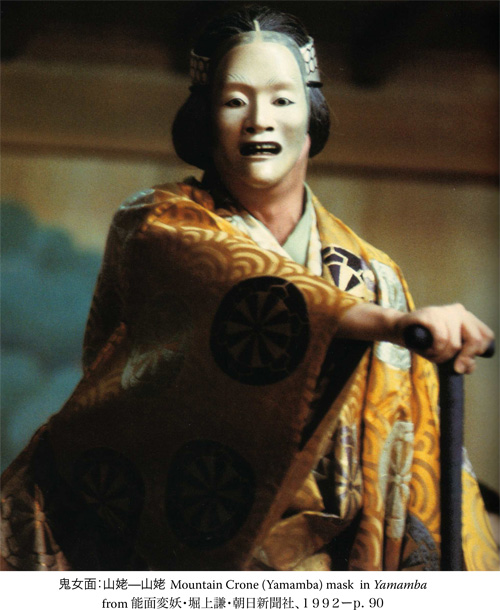
I'm not too familiar with Noh, but the most evident relation between Our Town and any production following the practice of Noh is the limited use of props and the absence of scenery. Thornton Wilder wanted theatre to focus on what the actors created, not what a carpenter or a company did. Thespians often lean on set and props to aid a performance, and Wilder made each actor rely on each other and themselves only.


CHINESE THEATRE
This art form relates directly to the Noh, for when there is absence of set and props, pantomime becomes essential when a scene is set in a place like Grover Corners, New Hampshire. Pantomime makes the audience imagine the world for the moment it is necessary to consider, but does not interfere when the actor is the focus, not his or her surroundings.


HUMANISM
This is a theme that Thornton Wilder must have thought very highly of, as there are examples of it in nearly every page of the Stage Manager's talks, and practically everywhere else in the play. The play examines life on earth, the interactions that occur, etc. Wilder digs deeper with his sense of Theatrical Expressionism, analysing the spiritual aspect, truly making the audience think about life itself.


I know that it seems I spoke quite a bit about my character [Stage Manager], but hey, that's what i know best...
My sermon in church this morning practically jumped out of the pages of Our Town: It was about living life to the fullest, realizing that yesterday is a teacher, tomorrow is a target, but today is a TREASURE. And that time is forever marching on, we either use it or lose it. 
I leave you with the verse, Benji. Good Night.

Psalm 118:24-- This is the day the LORD has made; let us rejoice and be glad in it.

Friday, October 8, 2010

Direction Ideas for "Spring Awakening"

My play that I picked, "Spring Awakening" is all about sexual discovery and breaking out of a sheltered upbringing, as well as the consequences that come with learning about love the hard way. 

I feel like this play has many different aspects that could be focused on, but as a director I would of course have to focus my vision to a few strong points. 


CENTRAL IMAGE:
-The ballerina in the blue tights: In the opening act of the play, Moritz and Melchior discuss how a fleeting image of a ballerina in blue tights first gave Moritz the "masculine itch". I think that this ballerina, an image normally associated with grace and elegant romantic ideals, would contrast beautifully with the absolute awkwardness (and often pain) that the students endure in this play, particularly while exploring their sexual selves. I could implement this image by creating a silent character out of this ballerina, one who dances in a fluid manner about the two students who are discussing or experimenting with their feelings and bodies, literally dancing around the students as they dance around difficult topics.

SET:
-I would propose a simple set with one elaborate central piece. The central piece would be the bridge where the female characters hang out in the majority of the play. The bridge would be elevated, so there is a riverbank below: a tree on one side, a small creek in the middle, and a graveyard on the opposite bank. There would be a wall short enough for Melchior to climb over next to the graveyard. Other scenes that take place would have only essential furniture (desks, tables, vineyard materials, etc.) that would only be placed on far SL or SR when necessary. 

LIGHTING:
-Connecting to the set, the most important part of lighting would be to keep the graveyard side of the bank fairly un-highlighted, until after the death of Moritz. This could easily be accomplished with light cast from the graveyard side, so the light would cause the wall to be a shadow over the graves. Another lighting effect could be using a rosier lighting on the bridge and a bluer lighting on the bank where the boys hang out, and blend the two when one crosses into the others "territory".


ACTING:
-The most important part of the acting would be to make sure that the raw emotions are real. The physical contact has to capture the essence of a sheltered teenager breaking out. If possible, I would have actors observe as many young teenagers as possible, go to a middle school dance or something. To not dramatize the romance, but to make it REAL (though not necessarily natural).

Whaddya say Benji, whaddya think?  

Wednesday, October 6, 2010

Tituba Character Analysis:


      Tituba is a black slave woman, which automatically contrasts her to everyone else in the play, as Salem is filled with white FREE Puritans. She is an important character in the first act, when the girls are seen dancing naked in the forest with her. She’s immediately associated with witchcraft (and essentially evil) because of her actions and her heritage (being from Barbados).  Tituba is seen again in the fourth act, almost belligerent, shouting to Sarah Good how they’re going to Barbados to hang out with the Devil. She also offers to speak to the devil for the marshal. There is polarity between Tituba and Parris. Parris serves as a intercessor for God while Tituba is the devil’s advocate (literally).  Again, Tituba is enslaved, black, and uneducated; Parris is free, white, and a leader of the town.